wood floor care, wood floor cleaning
Deep Cleaning a Hardwood Floor – 2025 Update

Apr
How to Deep Clean a Hardwood or Engineered Wood Floor
Deep cleaning a hardwood or engineered wood floor means removing the greasy film that normal vacuuming and every-day care can’t touch. That film sits on top of the polyurethane or factory finish, trapping dirt and dulling the floor. The safest way to deep clean is to:
Remove all loose dust and grit.
Mist a pH-balanced wood floor cleaner (like Mr. Floor Wood Floor Cleaner) over a small section.
Wait 10 seconds and scrub with a sturdy microfiber mop and clean microfiber mop pad using firm pressure.
Mist the same session again and go back over the same section with clean cotton bar towels to absorb the dirty solution.
Finish with a dry buff using a new, clean microfiber mop pad for a streak-free, “white sock test” shine.
This process works and is safe on most polyurethane-finished solid and engineered floors, but you should consult your floor manufacturer’s care instructions. (Meant for the lawyers!)
What is a Deep Cleaning of a Hardwood or Engineered Wood Floor?
Most modern hardwood and engineered wood floors are protected by a polyurethane or UV-cured urethane coating.
That coating creates a tough, nearly waterproof shell on top of the wood, but over time:
Kitchen grease, cooking oils and tracked-in grime cling to the finish.
Everyday cleaners leave behind tiny residues.
All of that builds into a stubborn film that makes even “clean” floors look dull.
Vacuuming, dust mopping, or a quick once-over with the wrong cleaner won’t touch that film. Deep cleaning is the mechanical + chemical process of:
Loosening the film from the finish, and
Physically removing the dirty solution from the surface before it can dry again.
Done correctly, deep cleaning restores the original clarity and sheen of the finish without damaging the coating or flooding the wood with water.
Why Surfactants Matter (and Why Vinegar, Mr. Clean & Oil Soap Don’t)
Deep cleaning starts with chemistry.
Surfactants are special molecules: one end “grabs” water, the other end “grabs” grease and dirt. When you spray a wood-safe surfactant solution on a polyurethane finish:
The surfactants break the bond between the greasy film and the floor.
The dirt and oil are suspended in the water-based solution.
You can then wipe the dirty solution completely off the floor.
Household products like Mr. Clean, Murphy’s Oil Soap and dish soap also contain surfactants—but they often come with strong solvents (like isopropyl alcohol or ethanol) that can attack a floor finish over time.
Many popular DIY “wood floor hacks” are also problematic:
Undiluted vinegar or frequent vinegar use – Manufacturers warn that acidic cleaners can dull and even strip a polyurethane finish over time.
Oil soaps and “shine restorers” – They can leave a sticky residue that attracts more dirt and can interfere with future recoating.
Hydrogen peroxide, black tea and other “miracle” cures – These can bleach, stain, or soften finishes if misused, and current guidance strongly discourages them on finished wood floors.
Mr. Floor Wood Floor Cleaner was formulated specifically to:
Use aggressive surfactants that release grease and grime from polyurethane finishes.
Avoid solvents and acids that can damage that finish.
Leave the floor clean and haze-free, ready to pass the white sock test.
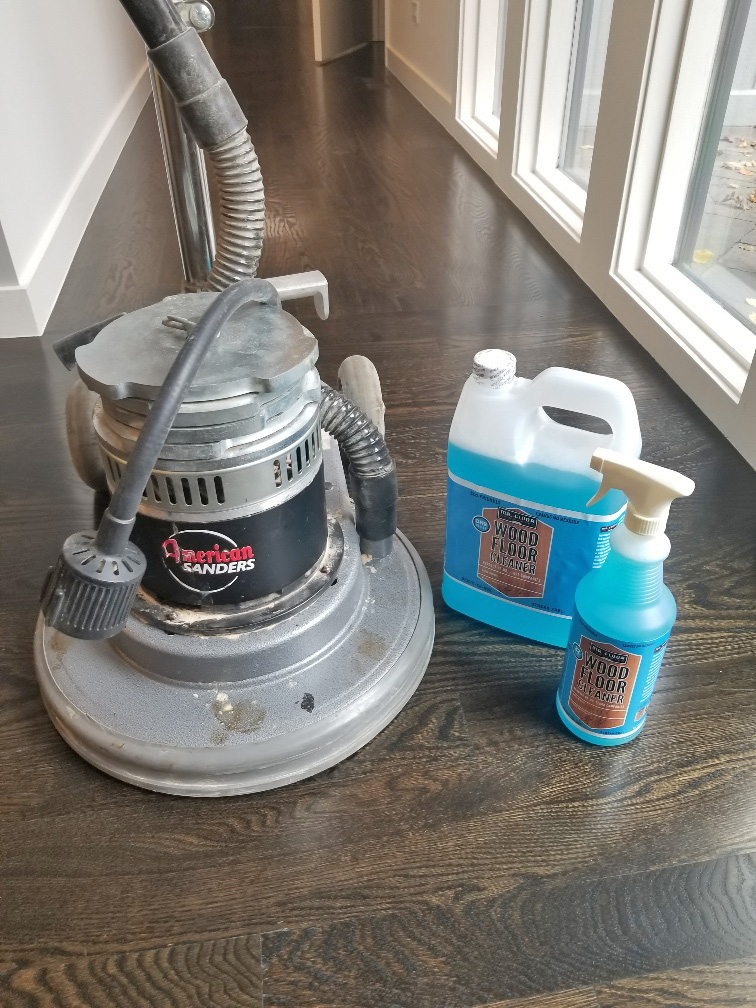
It’s the same cleaner Mr. Floor uses during professional deep-cleaning services.
How Mr. Floor Professionally Deep Cleans a Wood Floor
For busy homeowners and businesses, hiring a pro is often the fastest, most consistent option.
When Mr. Floor is called in for a deep cleaning service:
Prep and dry cleaning
Move or protect furniture as needed.
Vacuum or dust-mop thoroughly to remove all loose grit, pet hair, and dust. We never apply liquid to a floor that still has loose debris—that’s how you create “sandpaper” under the mop.
Section by section cleaning
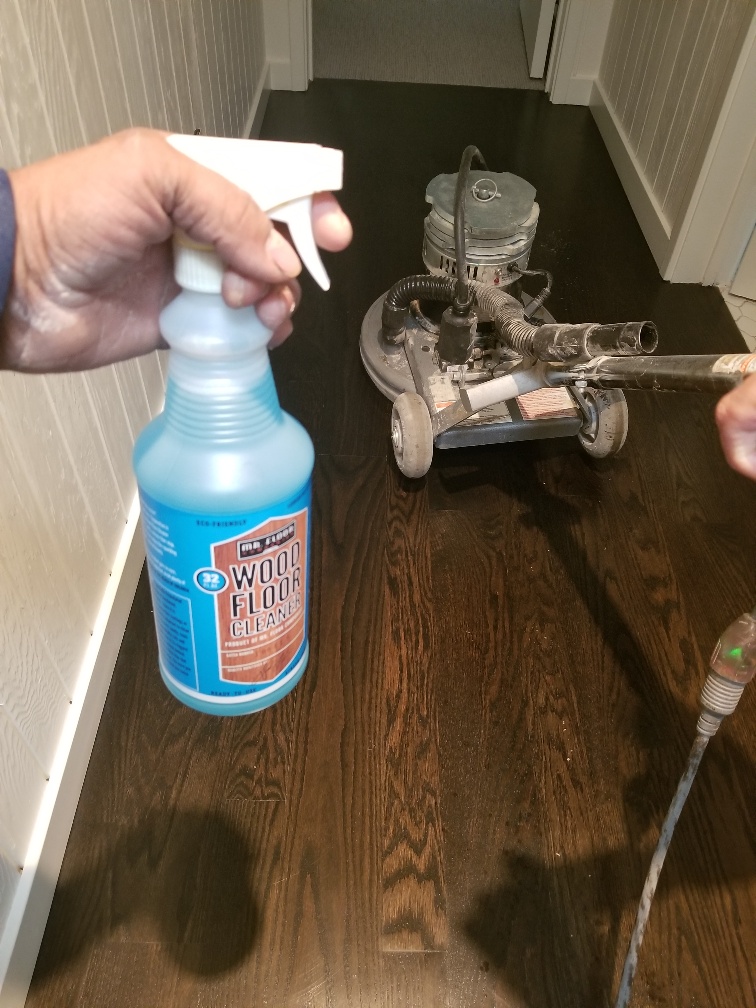
Mist a small area with Mr. Floor Wood Floor Cleaner—enough to wet the finish, but never puddle.
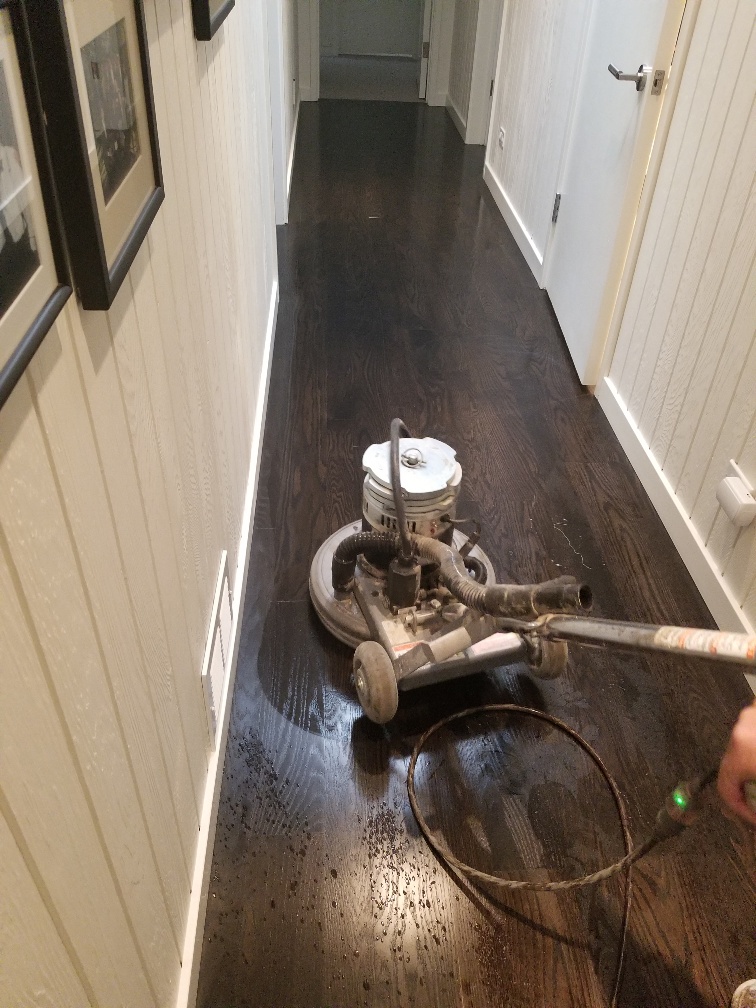
Run a professional buffing machine fitted with white cotton pads over the area several times.
Change pads early and often
As soon as the pads start to look dirty, they’re replaced.
We repeat this process until fresh pads come off the floor clean, which tells us the film has been fully removed.
Detail work by hand
Edges, corners, and tight spaces are cleaned by hand using microfiber and bar towels with Mr. Floor cleaner.
Section by section, the floor is restored to a bright, even sheen that will pass the white sock test from wall to wall.
Step-by-Step: How to Deep Clean a Wood Floor Yourself
You don’t need a thousand-dollar buffing machine to get professional-level results. Here’s a DIY version any homeowner can follow.
Step 1: Clear and dry-clean the floor
Move lightweight furniture and rugs.
Vacuum or dust mop thoroughly with a soft-bristle head or hard-floor setting (no beater bar).
Pay extra attention along baseboards, under cabinets and appliances and, and around kitchen islands.
Important: Never apply a wet cleaner over loose grit—that’s how scratches happen.
Step 2: Mist a small section with Mr. Floor Wood Floor Cleaner
Work in areas you can comfortably reach without walking over wet spots—usually 3′ x 4′ sections.
Hold the bottle a couple of feet off the floor and apply a light mist, not a puddle.
Step 3: Scrub with a sturdy microfiber mop and pad
Use a heavy-duty, aluminum microfiber mop (not a flimsy plastic one) and a fresh microfiber mop pad.
Press down firmly and move with the grain of the wood first and then across the grain.
Let the microfiber pad do the mechanical work of loosening the film and picking up the suspended dirt.
Repeat this step at least twice over the same area.
When the pad looks dirty, swap it out for a clean one For a 10′ x 12′ kitchen you should have at least six clean mop pads on hand and ready to go.
Step 4: Go back over the same section with cotton bar towels
Fold a white 16″ x 19″ bar towel into thirds and place it under the mop head.
Gently glide the mop over the same area to absorb the dirty solution.
Replace the towel as soon as it stops picking up moisture.
Microfiber pads are great at scrubbing; cotton bar towels are champions at absorbing the cleaning solution and suspended dirt when it’s been loosened.
Step 5: Optional “Master Class” buff for perfection
For the perfectionists (and your biggest fans):
Put a clean, dry microfiber pad under the mop.
Lightly buff the cleaned area with long, overlapping strokes.
This final buff removes the microscopic film that can dry on top of the coating and gives you that signature Mr. Floor shine. It isn’t strictly necessary for everyday cleaning, but it’s the difference between “that looks nice” and “wow.”
What You’ll Need to Deep Clean Your Wood Floor
Here’s a checklist you can keep on the page and also link to your product pages:
Mr. Floor Wood Floor Cleaner – pH-balanced, non-acidic, no rinsing needed.
Sturdy microfiber mop handle – Preferably aluminum and telescoping, designed to withstand firm pressure.
Multiple microfiber mop pads – At least a dozen so you’re not constantly stopping to do laundry.
A dozen white 16″ x 19″ cotton bar towels – Easy to wash, and the white fabric makes the collected dirt satisfyingly obvious.
Time and patience – You may need three, four or even five passes over badly soiled areas to match professional-machine results.
You can also invite readers to use coupon code “DeepClean20” for 20% off their first order of Mr. Floor cleaning products (new customers only), as you already do.
What NOT to Use When Cleaning a Hardwood or Engineered Wood Floor
Don’t use these cleaners on polyurethane-finished hardwood and engineered floors:
Steam mops – Steam introduces high heat and excessive moisture that can warp boards and damage the finish.
Undiluted or frequent vinegar cleaning – The acidity slowly dulls and can etch the finish.
Ammonia, bleach, or abrasive cleaners – These can strip or cloud the surface and void warranties.
Oil soaps and “gloss in a bottle” products – They may leave a residue that attracts dirt and can prevent future recoating from bonding properly.Hydrogen peroxide, black tea, and other trending hacks – They can bleach, stain, or weaken finishes if misused and are currently discouraged by cleaning experts for finished wood floors.
If a reader wants to disinfect a floor (e.g., after illness or a kitchen spill), you can link to and briefly summarize your separate article on cleaning before disinfecting countertops and floors, including CDC-aligned dilution rates for bleach on appropriate surfaces.
Hardwood & Engineered Wood Flooring Deep Cleaning FAQ
Q: Can I use a steam mop to deep clean my hardwood or engineered floor?
A: No. Steam mops introduce excessive heat and moisture that can damage both solid and engineered wood floors and may void your warranty. There’s no way to ruin a wood floor faster than with a steam mop.
Q: Is Mr. Floor Wood Floor Cleaner safe for engineered hardwood?
A: Yes, as long as the engineered floor has a standard polyurethane or factory urethane finish and you avoid flooding the surface. Mist lightly, mop, and immediately remove the dirty solution with cotton towels.
Q: Will deep cleaning remove scratches?
A: Deep cleaning removes built-up film and restores clarity and shine, which often makes light wear less noticeable. It won’t remove deep dents or scratches in the wood. Those require a fully sanded refinishing or a scuff and coat, if the scratches are light.
Q: How do I know if my floor is waxed, oiled, or polyurethane-finished?
A: If your home was built or remodeled in the last couple of decades, there’s a good chance your floors are prefinished or site-finished with polyurethane. Older homes or specialty installations may use wax or hard-wax oil. If you’re not sure, contact Mr. Floor or your flooring manufacturer before deep cleaning.
Q: Is this cleaning process safe for kids and pets?
A: When you use the Mr. Floor Wood Floor Cleaner it is absolutely safe for kids and pets! Just keep them off the floor until your finished or they’ll leave paw prints! 🙂
A: No. Steam mops introduce excessive heat and moisture that can damage both solid and engineered wood floors and may void your warranty. There’s no way to ruin a wood floor faster than with a steam mop.
A: Yes, as long as the engineered floor has a standard polyurethane or factory urethane finish and you avoid flooding the surface. Mist lightly, mop, and immediately remove the dirty solution with cotton towels.
A: Deep cleaning removes built-up film and restores clarity and shine, which often makes light wear less noticeable. It won’t remove deep dents or scratches in the wood. Those require a complete sanding and refinish or, if the scratches are light and finish intact, a buff and coat treatment.
A: If your home was built or remodeled in the last couple of decades, there’s a good chance your floors are prefinished or site-finished with polyurethane. Older homes or specialty installations may use wax or hard-wax oil. If you’re not sure, contact Mr. Floor or your flooring manufacturer before deep cleaning.
A: Yes, when you use a non-acidic, pH-balanced cleaner like Mr. Floor, follow label directions, and keep kids and pets off the floor until it’s dry.

Igor Murokh
Igor is a graduate of the University of Illinois and holds a B.A. in Economics. He has worked in the flooring industry for over 30 years and is the VP and Sales Manager of Mr. Floor Companies in Skokie, IL. Igor is a certified wood flooring inspector (CWFI) and routinely helps clients assess flooring issues.